
Touring Japan by Bicycle With Confidence
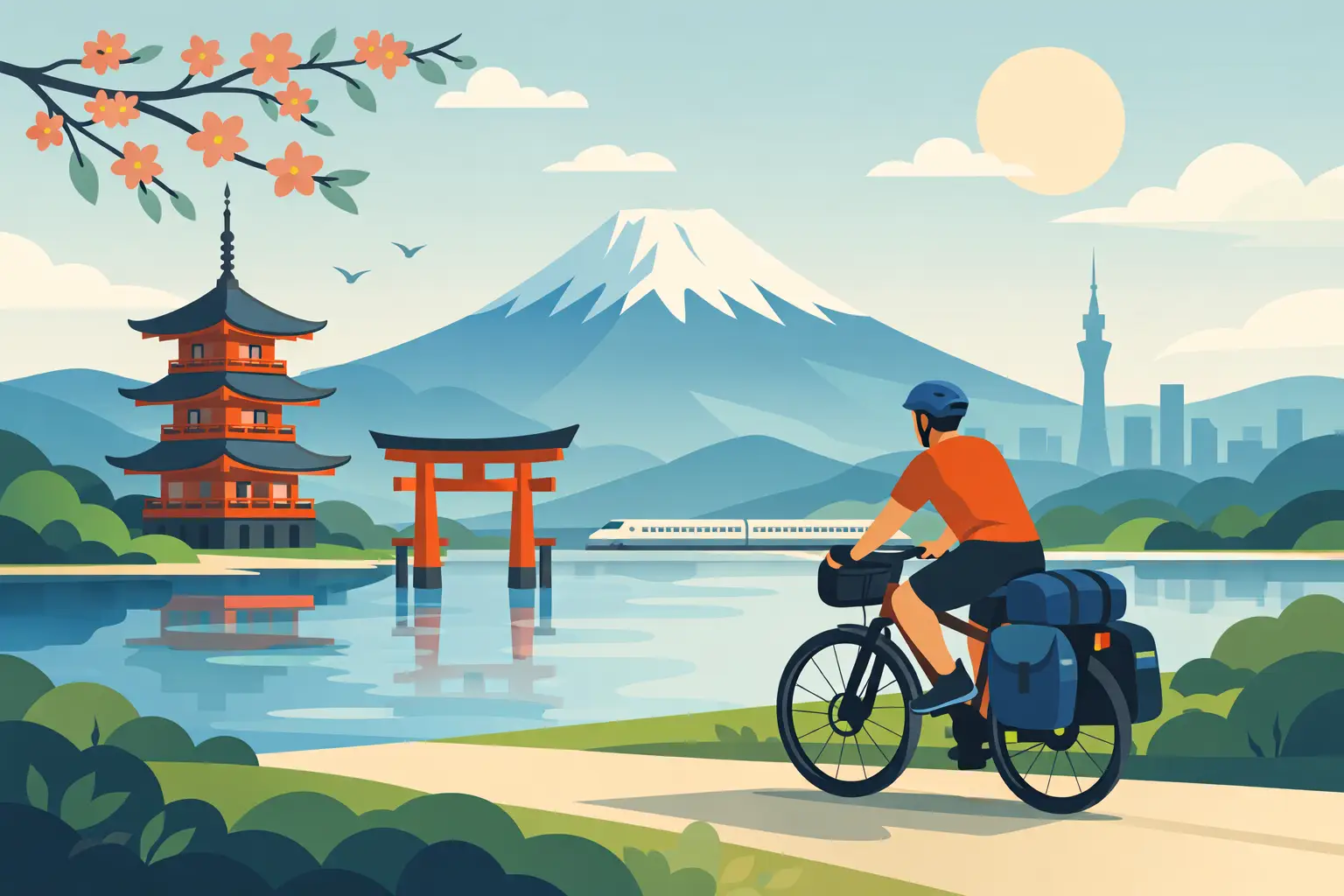
A quiet road outside Kyoto can change your entire impression of Japan. One minute, you are rolling past a neighborhood bakery and rice fields; the next, you are climbing toward a cedar forest with a temple bell somewhere ahead. Touring Japan by bicycle gives you access to those in-between places that trains, taxis, and day tours usually miss.
It is also more approachable than many overseas riders expect. Japan has outstanding pavement, reliable food stops, remarkably convenient public transportation, and a culture that rewards considerate travel. The key is not trying to ride the whole country at race pace. Choose a route that fits your fitness, prepare a bike that fits your body, and leave room for weather, detours, and the occasional stop that turns into an hour.
Touring Japan by bicycle starts with realistic pacing
Japan looks compact on a map, but its terrain has a way of extending a day. A coastal route may be mostly flat but broken up by ferry crossings, sightseeing stops, and frequent photo breaks. A short mountain day can become demanding quickly when a quiet road rises steadily through a valley for 10 miles.
For most first-time visitors, 30 to 50 miles per day is an enjoyable touring range. Experienced road riders can cover more, of course, but touring is different from training. You may want time for a market lunch, a castle visit, an onsen, or a long conversation with a café owner who is curious about your trip.
Plan your route around where you want to sleep, not just where you want to ride. Larger cities have abundant hotel choices, while rural areas can have fewer options, especially on weekends, holidays, and during cherry blossom or fall foliage seasons. Booking overnight stays in advance removes a lot of stress, particularly if you arrive tired or wet.
Three strong ways to begin
Kansai is ideal if you want cycling mixed with major cultural sights. From Kyoto or Osaka, you can reach quieter riverside roads, historic towns, tea-growing country, and rolling rural lanes without committing to a long expedition. It works well for a one-day ride, a long weekend, or the opening section of a multi-day journey.
The Shimanami Kaido is Japan’s classic island-hopping ride. It combines dedicated cycling infrastructure, dramatic bridges, small port towns, and manageable daily distances. It is popular for good reason, though the most famous sections can feel busy in peak periods. Starting early and adding a quieter island road can make the experience feel much more personal.
For riders with more time, inland routes through the Japanese Alps, the Noto Peninsula, Shikoku, Kyushu, or the San’in coast provide bigger landscapes and a stronger sense of distance. These areas reward self-sufficient planning. Services are available, but not always exactly when or where you expect them.
Match the bicycle to the trip, not the label
A fast road bike is a great choice for light luggage, paved routes, and riders who care about pace and climbing efficiency. A touring bicycle makes more sense when you want panniers, wider tires, a more upright position, and the freedom to take rougher side roads. Neither is automatically better. It depends on the route, the season, how much you are carrying, and how you like to ride after several consecutive days.
Fit matters as much as bicycle type. A rental bike should be selected for your height and riding style, then adjusted for saddle position, handlebar reach, pedals, and luggage needs. If you normally ride clipless pedals, confirm compatibility before your trip. If you have a preferred saddle, bringing it can be worthwhile for longer tours.
Do not treat luggage as an afterthought. A backpack is fine for a short city ride, but it can become uncomfortable on a hot, humid day or during a long climb. Panniers keep weight off your shoulders and make it easier to carry a rain layer, water, tools, and spare clothing. Many travelers also use Japan’s luggage-forwarding services to send their larger suitcase between hotels while keeping only cycling essentials on the bike.
Before departure, make sure you have these five practical items sorted:
- A navigation plan that works without dependable mobile data
- Front and rear lights, plus a charging cable or spare power source
- A rain layer that is easy to reach without unpacking everything
- A small repair kit with tube, tire levers, pump, and multi-tool
- A way to carry cash, identification, and a backup payment card
A professionally prepared bike saves time at the start of the trip and reduces the chance that a small mechanical issue interrupts a good day. Road Bike Rental Japan can arrange touring equipment, GPS support, multi-day rentals, and flexible pickup, return, delivery, or collection arrangements for rides that do not begin and end in the same place.
Ride Japan’s roads with awareness and courtesy
Traffic travels on the left. This is simple in theory, but riders from the US should give themselves a few cautious miles to make it automatic, especially at intersections and when pulling out of convenience stores. Ride predictably, use hand signals, and look carefully for vehicles turning across your path.
Japanese drivers are often considerate around cyclists, but that is not a reason to relax your road awareness. Urban traffic can be dense, narrow streets can be visually busy, and large trucks need space. On faster roads, hold a steady line and avoid sudden movements toward the center of the lane. On quiet rural roads, stay alert for tunnels, drainage grates, fallen branches, and mossy pavement after rain.
Sidewalk riding rules vary by location and circumstance, so do not assume a sidewalk is automatically the right place to ride. In many areas, the safest and most appropriate option is the road. When you do use shared paths, slow down, give pedestrians priority, and be patient. A bell is useful as a warning, not a demand for people to move.
Helmets are strongly encouraged for all riders in Japan and are a sensible choice for touring. Use lights in low light and tunnels, even during the day. Japan has many tunnels, and a bright rear light is one of the easiest ways to improve visibility.
Let food, weather, and trains shape the day
Convenience stores are one of the great advantages of cycling in Japan. They are dependable places to refill water, find rice balls, sandwiches, fruit, coffee, and quick recovery food. In more rural areas, however, they may be spaced farther apart than you expect. Carry extra water before a mountain climb or a long coastal section.
Summer heat and humidity deserve real respect. Start early, use sunscreen, drink before you feel thirsty, and lower your mileage expectations. Spring and fall often offer the best balance of temperatures and scenery, although spring can bring variable weather and fall foliage can make popular lodging areas busy. Winter riding can be excellent in milder regions, but mountain passes may be cold, icy, or closed.
Trains provide a useful escape hatch, but bicycles usually need to be bagged before boarding. A lightweight bike bag can turn a weather problem, mechanical issue, or tired afternoon into a simple change of plan. That flexibility is one reason Japan works so well for independent bicycle travel.
Decide where local support adds value
Independent touring is rewarding because you control the pace, the stops, and the route. Yet local support can make the first day much easier, particularly if you are arriving from an international flight, navigating a new city, or beginning with limited Japanese language skills.
A guided day ride is useful when you want local riding confidence without committing to a fully guided tour. It can show you how Japanese roads feel, introduce routes you would not find alone, and help you settle into left-side traffic before a longer self-guided itinerary. For multi-day riders, route advice, equipment setup, luggage strategy, and emergency contact information can be just as valuable as the bike itself.
Build a little margin into every day. Leave time for a ferry you nearly miss, a roadside shrine you did not plan to visit, or a rainstorm that sends you into a noodle shop. Those unplanned pauses are often where a bicycle trip in Japan becomes more than a route on a GPS screen. Set off prepared, ride with care, and let the road give you reasons to stay longer.