
Cycling Tour Logistics for Riding Japan Well
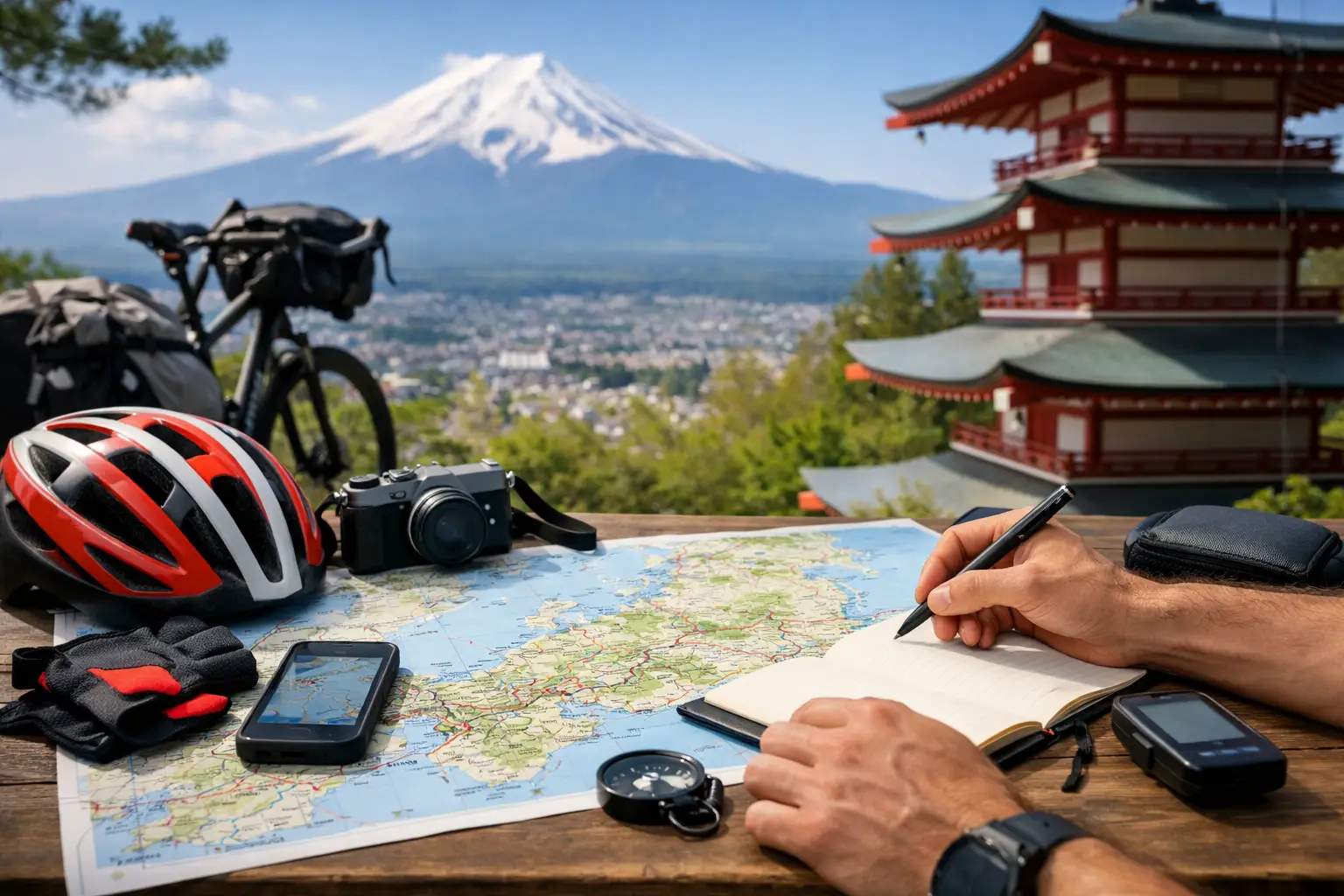
A great ride in Japan can unravel before the first climb if cycling tour logistics are treated as an afterthought. The route may look perfect on a map, but the real questions are practical: Where will your luggage be tonight? Can the bike fit you properly? Does your hotel accept a bicycle? What happens if rain moves in over a mountain pass?
The good news is that Japan is an outstanding place for independent cycling when the trip is built around those details. Roads are generally well maintained, convenience stores are frequent, and regional trains, ferries, hotels, and delivery services can make point-to-point travel possible. The catch is that each part works best when planned in the right order.
Start Cycling Tour Logistics With the Bike
Your bicycle choice determines more than comfort. It affects your route, packing capacity, transport options, and how much energy you have left to enjoy a town after the ride.
For a fast road itinerary on routes such as the Shimanami Kaido, a quality road bike with appropriate gearing is often the right call. A lighter setup is enjoyable on rolling coastal roads and longer climbs, but it leaves little room for carrying more than essentials. For multi-day travel through rural areas, a touring bike with panniers is usually the more practical choice. You can carry a change of clothes, rain layers, tools, chargers, and daily supplies without loading your back.
Fit is not a detail to settle at the counter. Share your height, inseam, preferred saddle position, pedal system, and riding style before arrival. If you have strong preferences for a compact crank, easier climbing gears, wider tires, or flat pedals, say so early. A properly prepared rental bike saves time on day one and reduces the chance that a minor fit issue becomes a painful fourth day.
Bringing your own bike is worthwhile for some riders, especially those with a highly specific fit or an event-focused trip. But it also means traveling with a large bike case, rebuilding the bike after a long flight, finding a place to store the case, and packing it again before departure. Renting locally can remove those complications while giving you a bike prepared for Japanese roads and supported by people who know the route.
Build the Route Around Real Riding Days
Distance alone is a poor measure of a day in the saddle. A 50-mile coastal ride with ferry crossings, photo stops, and a late lunch can feel relaxed. A 50-mile mountain day with 5,000 feet of climbing, summer heat, and limited food stops can feel ambitious even for a strong cyclist.
For most travelers, it is wiser to leave room for Japan itself. A route may pass a temple town, a roadside citrus stand, a quiet fishing harbor, or an onsen that becomes the highlight of the day. Planning every hour creates pressure to ride past the experiences that made the trip appealing in the first place.
Use elevation, daylight, and transport cutoffs to set each stage. Ferry services may run less frequently outside peak periods. Small restaurants can close between lunch and dinner. In mountain areas, tunnels and passes may change the character of a route quickly. Build an arrival buffer, particularly when the day ends at a rural inn with limited check-in hours.
A rest day is not wasted time. It gives you a weather buffer, a chance to explore without panniers, or a recovery day after a hard climb. On a week-long itinerary, one flexible day can protect the entire trip from a single storm or mechanical issue.
Match the season to the route
Japan’s cycling seasons vary sharply by region. Spring and fall often offer the most comfortable conditions, although cherry blossom periods and autumn foliage can make popular areas busy. Summer brings long daylight hours and green mountain scenery, but humidity and heat can be demanding. Start earlier, carry more water, and avoid treating midday climbs casually.
Winter can be excellent in milder southern and coastal regions, while central and northern routes may have snow, ice, and closed mountain roads. Rainy-season weather does not automatically cancel a trip, but it calls for waterproof luggage, reliable lights, a flexible schedule, and lower expectations for high-elevation routes.
Move Luggage Instead of Carrying Everything
One of Japan’s most useful travel advantages is luggage forwarding. Rather than riding with a full suitcase, send your main bag ahead to the next hotel or a planned end point and carry only what you need on the bike. This is especially helpful when combining city stays, train travel, and multi-day riding.
Confirm the timing with each accommodation before relying on this system. Some properties accept luggage only during certain hours, and same-day delivery is not guaranteed for every destination. A sensible approach is to send your suitcase one stop ahead when possible, then keep a small overnight kit in your pannier. That protects you if weather, a missed ferry, or a change of plans delays your arrival.
For a point-to-point cycling trip, ask your bike provider about inter-location pickup and return, delivery, and collection. These services can turn a complicated loop into a straightforward one-way ride. Road Bike Rental Japan can prepare touring setups with panniers and GPS support, as well as coordinate bike logistics beyond its physical hubs for riders heading farther afield.
Keep critical items with you: passport, medications, glasses or contact supplies, wallet, phone, charging cable, and a lightweight change of clothes. Checked luggage and forwarded luggage are convenient, but neither should hold the items you cannot comfortably replace.
Plan for Trains, Ferries, and Hotel Arrivals
Japan’s rail network is excellent, but bicycles are not treated like ordinary luggage. On many trains, a bike generally needs to be in a proper bike bag or fully covered after removing wheels or otherwise reducing its size. Rules and reservations can vary by service, especially on high-speed rail. Do not assume you can roll a loaded touring bike onto a platform and board at the last minute.
The easiest solution is often to arrange the itinerary so the bike is collected near your starting point and returned near your finish. If a train connection is essential, practice packing the bike bag before travel day and allow extra time at the station. Keep in mind that elevators can be crowded and station platforms are busy places to handle loose wheels and bags.
Ferries are often simpler and more bike-friendly, particularly on island and coastal routes. Still, check operating days, final departures, and weather policies in advance. The last ferry of the day is not a target to chase after a mechanical problem.
When booking accommodations, look beyond price and location. Ask whether the property can store a bicycle indoors or in a secure covered area, whether rooms are accessible by elevator, and whether breakfast is available before an early start. A beautiful ryokan at the top of a steep lane may be memorable, but it is a different proposition after a wet 70-mile day.
Navigation, Power, and Everyday Road Readiness
Use a navigation setup that does not depend entirely on a live phone signal. Download route maps offline, bring a handlebar mount if you use your phone for navigation, and carry a battery pack. GPS units are excellent for preserving phone battery, but they also need charging and should have the route loaded before you leave Wi-Fi.
Japan is safe and orderly, yet cycling remains road travel. Ride on the left, expect narrow streets in older towns, and watch for car doors, drainage grates, and vehicles turning across bike lanes. Use front and rear lights even in daytime, especially in tunnels and rainy conditions. Mountain descents can be colder than expected, so a packable wind layer earns its space in nearly every season.
Convenience stores are a reliable part of the riding routine, but they are not everywhere. Before committing to a remote stretch, check water, food, and restroom options. Carry cash as well as cards, since smaller rural businesses may have limited payment choices. An eSIM or local data plan also makes navigation, translation, and accommodation calls much easier.
Your repair plan should be equally simple. Carry tubes or a compatible puncture solution, tire levers, a small pump or inflator, and a multitool. More importantly, know who to contact if a problem exceeds a roadside fix. Local support matters most when a derailleur is damaged 40 miles from the nearest bike shop, not when the bike is handed over in the city.
Make the Itinerary Flexible Enough to Enjoy
The strongest touring plans have a clear structure without becoming rigid. Reserve key accommodations, identify transport connections that cannot be missed, and keep a shorter alternative route for difficult weather. Then leave enough room to stop when a side road looks interesting or a local recommendation changes your plans.
Before departure, put your first day’s route, hotel address, emergency contacts, and bike-provider details in one easy-to-find place. Charge your devices, check the forecast, and lay out the clothing you will actually ride in rather than the clothing you hope to need. That small evening routine makes mornings calmer and gets you onto the road while the air is cool and the countryside is waking up.