
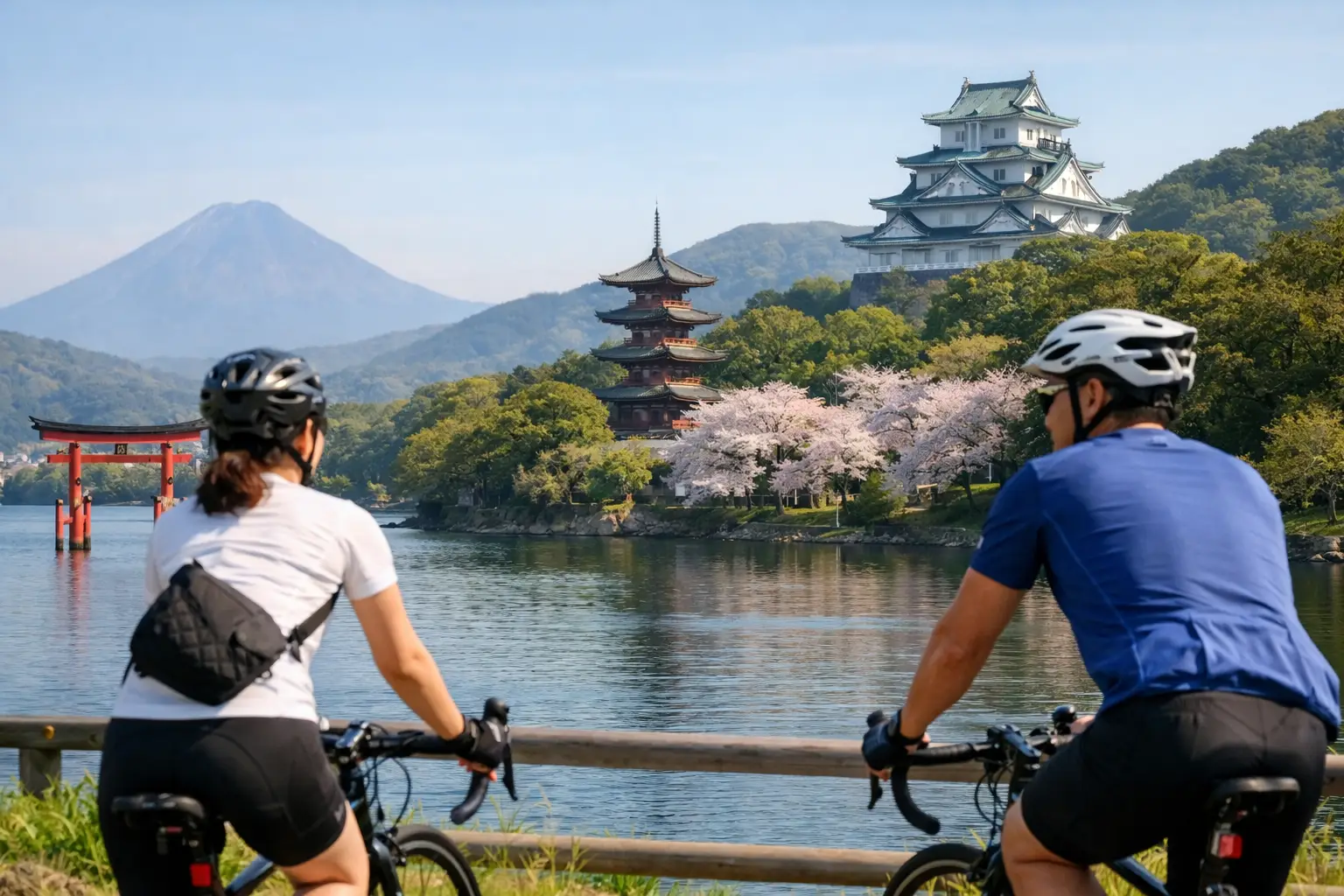
7 Kansai Cycling Routes for Tourists to Ride
Kansai cycling routes tourists remember are rarely the ones that rush between famous landmarks. They are the rides where a quiet river path leads out of Kyoto, a roadside market becomes lunch, or a temple gate appears after a steady climb through cedar-covered hills. Osaka, Kyoto, Nara, Shiga, and Wakayama sit close together, but each rewards a different kind of rider. The key is choosing a route that fits your time, fitness, confidence in traffic, and the bike you are riding.
For independent travelers, Kansai is especially rewarding because a great ride can begin from a major rail station and finish somewhere completely different. That freedom also requires a little planning. Road surfaces, elevation, seasonal weather, and train rules can change the experience quickly.
1. Kyoto to Arashiyama via the Katsura River
For a relaxed first day in Kansai, ride west from central Kyoto toward Arashiyama. The Katsura River corridor provides an approachable escape from the city, with broad views, mostly gentle terrain, and frequent opportunities to stop. Arashiyama is best known for its bamboo grove and Togetsukyo Bridge, but the pleasure of this ride is getting there under your own power rather than joining the crowded buses.
A practical route uses quieter streets to reach the river, then follows the riverside where possible. Expect some navigation attention around bridges and urban sections, but this is a comfortable option for touring bikes and recreational road riders. Start early if you want to walk around Arashiyama before the busiest hours.
The trade-off is that this is not a fully uninterrupted bike path. Kyoto is a working city, and the route includes crossings, pedestrians, and busy areas near the destination. It is ideal for riders who want a scenic half-day outing, not riders looking for a remote all-day challenge.
2. Kyoto to Uji Along the Uji River
South of Kyoto, Uji offers one of the best combinations of cycling, history, and food in a manageable day. The city is associated with high-quality green tea and is home to Byodoin Temple, whose Phoenix Hall is instantly recognizable even if you have never studied Japanese architecture.
The ride from Kyoto can be shaped to suit your appetite for traffic. A more direct line is efficient but urban. A more relaxed approach uses river corridors and quieter local roads, extending the distance while making the journey more enjoyable. For many visitors, that is the better choice. Cycling in Japan is often less about chasing a perfect average speed and more about leaving enough time for a tea stop, a temple visit, and a wrong turn that reveals a neighborhood you would otherwise miss.
This route is well suited to flat-bar touring bicycles, e-bikes where available, and road bikes with moderate gearing. It also works well as a one-way ride if your itinerary continues south, though confirm return and transport arrangements before setting out.
3. Kyoto to Lake Biwa Through the Mountains
Lake Biwa is Japan’s largest lake, just east of Kyoto, and the journey across the mountains is a favorite for stronger riders. The destination changes the mood completely: Kyoto’s dense lanes give way to lakeside roads, fishing villages, open sky, and longer stretches where it is possible to settle into a rhythm.
There are several ways over the hills. Some are steep and quiet; others are more direct but carry more traffic. Your best choice depends on bike handling, weather, and whether you want to continue around part of the lake or simply reach Otsu and return by train. Riders accustomed to climbing will appreciate the variety. Less experienced cyclists should not underestimate the gradients, especially in summer humidity or when carrying panniers.
A properly prepared road bike makes this route more fun, but gearing matters more than speed. If you are traveling with luggage, a touring bike with lower gears can be the sensible choice. Bring layers in spring and fall, as mountain descents can feel much cooler than central Kyoto.
4. Osaka to Nara Through the Yamato Plain
Osaka and Nara are close on a map, yet cycling between them reveals a side of Kansai that rail travel skips. Once clear of Osaka’s central streets, the landscape gradually opens into fields, small towns, old irrigation channels, and low ridgelines. Nara Park, with its deer and major temples, makes a memorable finish.
This is a rewarding point-to-point ride for travelers who are comfortable navigating urban departure routes. The first section can be busy, and it is worth starting with a tested GPX route rather than improvising. After that, the riding becomes more relaxed, with plenty of convenience stores and local restaurants for refueling.
Arrival matters here. Nara Park is heavily visited, and cycling through crowded pedestrian areas is neither fast nor enjoyable. Park the bike legally, walk the final sections, and give yourself time to see Todaiji Temple or wander the older streets around Naramachi. For an easier day, start from the eastern side of Osaka or use a train to shorten the city portion.
5. The Asuka and Kashihara Countryside Loop
If you want ancient Japan without the crowds of Kyoto, make time for the rural roads around Asuka and Kashihara in Nara Prefecture. This is a slower, more cultural ride through rice fields, burial mounds, small shrines, and villages that have retained a strong sense of place. It is one of the best Kansai cycling routes for tourists who value atmosphere over distance.
The terrain rolls rather than climbs relentlessly, making it satisfying on a road bike and comfortable on a touring bike. You can build a short loop around Asuka Station or connect the area to Nara City for a longer day. Spring brings fresh green fields, while autumn offers clearer air and golden colors around the farms.
Services can be more limited than in Osaka or Kyoto, particularly outside lunch hours. Carry water, a snack, and offline navigation. This is also a place to ride with restraint: narrow lanes are shared with residents, farm vehicles, and walkers. Slow down, greet people, and treat the roads as local space rather than a closed course.
6. Koyasan to the Wakayama Hills
Koyasan is known for its Buddhist temple complex high in the mountains of Wakayama, and cycling there is a serious undertaking. The climbs are long, the weather can shift quickly, and the descent demands confident braking and bike control. For experienced riders, however, this is a remarkable way to experience the transition from forested mountain roads to temple-town streets.
A smart approach is to use rail for part of the ascent and ride the quieter roads around Koyasan, or to plan a supported point-to-point route with accommodation already arranged. Carrying full luggage up a major climb may be appealing to committed bikepackers, but it can turn a cultural trip into a survival exercise during hot weather.
This is where professional setup and route advice make a real difference. Road Bike Rental Japan can prepare a road or touring bike around your planned mileage, luggage needs, and riding experience, so you are not trying to solve fit and gear questions on the morning of a mountain ride.
7. Osaka Bay and Sakai for an Easy Urban Ride
Not every good day needs a major destination. The waterfront areas south of central Osaka and the historic city of Sakai offer a flatter option for travelers with limited time. Sakai has strong connections to traditional craft, merchant history, and the enormous Mozu tomb mounds, while bayfront roads provide a welcome sense of space after Osaka’s compact downtown.
Route selection is crucial. Industrial-port areas can look inviting on a map but may have heavy truck traffic or restricted roads. Use a route designed for bicycles, stay alert at large intersections, and avoid peak commuting periods. With those cautions, this can be an excellent half-day spin for riders arriving in Osaka or testing a bike before a longer tour.
How to Choose the Right Kansai Route
Start with your real riding day, not your best day at home. Jet lag, summer heat, unfamiliar traffic patterns, photo stops, and temple visits all add time. A 35-mile route with moderate climbing can fill a full day in Kansai, particularly when it begins and ends in cities.
For a first ride, choose riverside Kyoto, Uji, or Sakai. If you are fit and want elevation, Lake Biwa or Koyasan will be more rewarding. Nara and Asuka sit in the middle: they offer enough distance to feel like a journey, with a strong cultural payoff along the way.
Navigation should be prepared before departure. Download offline maps, carry a charged phone and power bank, and use a handlebar mount if possible. Japan is exceptionally safe for cycling in many respects, but roads can be narrow, and route apps do not always distinguish a pleasant lane from a stressful arterial road. A local GPX route is worth far more than the shortest line on a map.
Finally, plan around the seasons. Cherry blossom time is beautiful but crowded. Summer heat and humidity can be intense, so begin early and drink more than you expect. Fall is prime riding weather, while winter brings crisp, clear days but short daylight and cold mountain conditions.
Kansai rewards cyclists who leave room in the schedule. Reserve a bike that fits, choose one route that genuinely suits your day, and let the small stops between the famous places become part of the ride.