
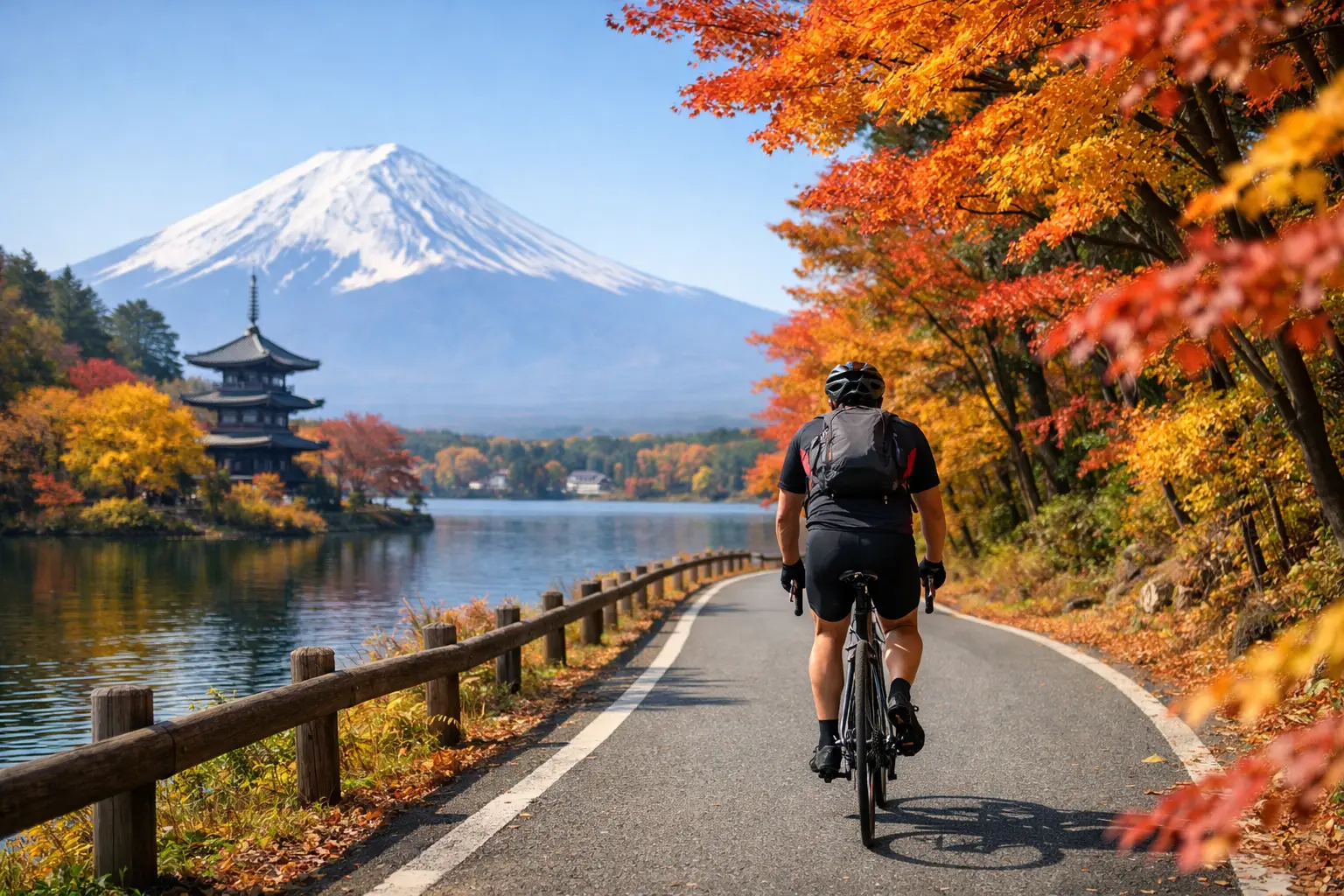
A clear October morning on the Shimanami Kaido can feel made for riding: cool air, quiet island roads, and the Inland Sea flashing between bridge spans. But the best autumn cycling destinations Japan offers are not all at their best in the same week. Foliage moves south and downhill gradually, mountain temperatures drop quickly, and popular areas can be busy around long weekends. Choose the right region for your dates and preferred pace, and autumn becomes one of Japan’s most rewarding seasons to travel by bike.
For most visitors, mid-October through late November is the broad autumn cycling window. Higher inland areas turn first, while Kyoto, Nara, and coastal routes often hold their best color from mid-November into early December. Pack layers, plan for shorter daylight, and leave room for a hot lunch, an onsen stop, or a change of route if rain arrives.
8 Best Autumn Cycling Destinations in Japan
1. Shimanami Kaido: islands, bridges, and late-season comfort
The 43-mile Shimanami Kaido between Onomichi and Imabari remains the easiest recommendation for first-time cycling visitors. Dedicated cycling access on the bridges, frequent convenience stores, excellent views, and a reliable network of ferry and train connections make it unusually approachable for independent riders.
Autumn is especially good here because the Seto Inland Sea stays milder than Japan’s mountain regions. October and November bring comfortable climbing temperatures and less summer humidity, while citrus groves, fishing harbors, and small island cafes give the ride a distinctly local rhythm. Strong road cyclists can cover the route in a day, but two days lets you explore quieter island roads on Ikuchijima, Omishima, or Oshima.
The trade-off is wind. Bridge crossings can be exposed, particularly after a weather front. A bike with low enough gearing, a light wind layer, and securely packed bags make a major difference.
2. Kyoto and the Lake Biwa region: culture between the climbs
Kyoto is not just a city ride. It is a strong base for riders who want temples and excellent food alongside rural roads, tea fields, lakeside cruising, and serious mountain options. In November, the hills around Ohara, Takao, and Keihoku can be beautiful, while the city itself is often at peak color later in the month.
For a gentler day, ride north along the Kamo River and out toward Ohara, then return by a different valley road. More experienced riders can make a full loop through the mountain villages north of Kyoto. Lake Biwa adds another option: the shoreline is largely flat, with broad views and plenty of places to stop. A complete lap can be a substantial multi-day undertaking, but south-lake and east-shore sections work well for relaxed day rides.
Kyoto’s autumn popularity is the main consideration. Start early, avoid routing a road bike through the busiest temple precincts, and reserve accommodations well ahead for weekends.
3. Nara and Asuka: quiet roads through Japan’s early history
South of Nara City, the Asuka area is ideal for cyclists who prefer lanes over landmarks with ticket lines. Low hills, rice fields, old tombs, stone monuments, and small farming villages create a compact but richly textured ride. The terrain rolls rather than climbs relentlessly, so it suits touring bikes and recreational road riders as well as stronger cyclists.
Autumn brings golden fields, persimmon trees, and crisp mornings. You can combine Asuka with the temple towns of Kashihara and Sakurai, or continue toward the mountain foothills for a longer day. Nara Park is worth seeing, but the real pleasure comes once the traffic thins and the road narrows beyond the city.
This is a good destination for travelers who want cultural depth without committing to a remote, high-elevation route. It also pairs naturally with Osaka or Kyoto before or after your ride.
4. Hokkaido: early color and wide-open roads
Hokkaido’s cycling season shifts earlier than the rest of Japan. By late September and early October, roads around Furano, Biei, and the Daisetsuzan foothills can offer peak fall color, clear skies, and broad agricultural landscapes. The scale is different from central Japan: longer distances, fewer services, and open roads that reward riders comfortable being self-sufficient.
Biei’s rolling farm roads are scenic but not flat. Furano adds vineyard views and mountain backdrops, while routes nearer the national parks can be spectacular when conditions cooperate. Bring warm gloves and a proper insulating layer. Morning temperatures can be close to freezing, and an early snowstorm is possible in higher terrain.
Hokkaido is best for experienced independent riders with a flexible itinerary. It is less suited to a first touring trip if you are relying on frequent cafes, late check-ins, or daily mechanical support in small towns.
5. Nikko and the Oku-Nikko highlands: color with a serious climb
Nikko is among the most dramatic autumn rides in Japan, but it asks more from the rider. The famous Irohazaka road climbs sharply from Nikko toward Lake Chuzenji, with multiple hairpins and heavy foliage in season. At the top, cooler lakeside roads and views toward mountains and waterfalls make the effort worthwhile.
Timing is everything. Oku-Nikko changes early, often from late September into October, while lower Nikko follows later. Weekday riding is strongly preferable because foliage traffic can become slow and dense. Start early, use lights in tunnels or low light, and treat weather forecasts seriously.
For riders who enjoy climbing, Nikko delivers a memorable point-to-point or out-and-back day. For casual riders, a more comfortable plan is to use transport for the steepest elevation gain and ride the quieter highland roads once you are up top.
6. Nagano and the Japanese Alps: the route for mountain riders
Nagano is where autumn cycling becomes a test of pacing as much as scenery. The valleys around Matsumoto, Azumino, and Lake Suwa offer accessible riding, while nearby climbs lead toward high passes and alpine views. Apple orchards, clear rivers, and snow-dusted peaks can all appear on the same late-autumn day.
The key is choosing elevation honestly. Valley routes may be pleasant in October, while higher passes can be cold, closed, or unsafe after storms. A touring rider may be happiest linking towns and hot springs at lower elevations; an experienced road rider may want a demanding climb with a support plan and a warm descent layer.
Accommodation can be more spread out than in Kyoto or the Inland Sea area, so map daily distances around your overnight stops rather than assuming every village has options. This is a region where local route knowledge pays off.
7. Izu Peninsula: ocean roads, hot springs, and November color
Within reach of Tokyo, the Izu Peninsula offers a satisfying mix of coastal riding and steep interior climbs. The east coast has dramatic Pacific views, while central Izu moves through forested ridges, wasabi-growing valleys, and hot-spring towns. By November, the heat has eased, making the peninsula far more enjoyable than in summer.
Izu is not a flat escape from the city. Even coastal routes can be hilly, and the most beautiful interior roads require sustained climbing. Still, riders can tailor the experience: take a train south, ride one scenic section, stay in a ryokan, and use the next day for a different coast or valley. That flexibility is a major advantage for travelers with limited time.
Watch for damp leaves in shaded sections after rain. Descents can be technical, particularly if you are carrying panniers or riding an unfamiliar road bike.
8. Kyushu’s Yufuin and Aso region: warmer roads and volcanic scenery
Kyushu extends the autumn riding season for travelers arriving in November. Around Yufuin, the roads pass beneath mountain slopes and through small rural communities, with hot springs waiting at the end of the day. Farther south, the Aso region offers big volcanic landscapes, grasslands, and long, exposed roads unlike almost anywhere else in Japan.
Weather can vary sharply with elevation, and volcanic conditions or road restrictions can affect Aso routes. Check locally before committing to a loop. When conditions are good, however, the combination of broad scenery, lighter crowds than Kyoto, and regional food makes Kyushu an outstanding choice for a multi-day cycling trip.
Planning an Autumn Ride in Japan
A successful autumn itinerary starts with the riding experience you want, not just the foliage forecast. If you want dependable logistics and moderate terrain, choose the Shimanami Kaido, Asuka, or Lake Biwa. If climbing is part of the goal, look to Nikko, Nagano, Izu, or Aso. If your travel dates fall in late September, head north; if they fall in late November, Kyoto, the Inland Sea, Izu, and Kyushu are stronger bets.
Japan’s trains make flexible point-to-point rides possible, but bike policies and station access deserve advance planning. For multi-day travel, a properly fitted touring bike, panniers, navigation, lights, repair essentials, and a planned luggage strategy remove much of the uncertainty. Road Bike Rental Japan can prepare road and touring setups, help match your bike to the route, and coordinate practical options for riders beginning in Kansai or continuing farther afield.
Do not chase peak color so tightly that you miss the ride itself. A quiet road through a harvest village, a warm bowl of noodles after a wet climb, and an unplanned detour to a local shrine can be just as memorable as the most photographed maple tree. Reserve your bike, build in an extra hour each day, and let Japan’s autumn roads set the pace.